Core idea
Run parallel search strategies across the full talent pool instead of one narrow query path.
Case Study
Designing and validating an AI sourcing system that runs multi-strategy search, ranks candidates, and explains fit across pre-apply and post-apply workflows.
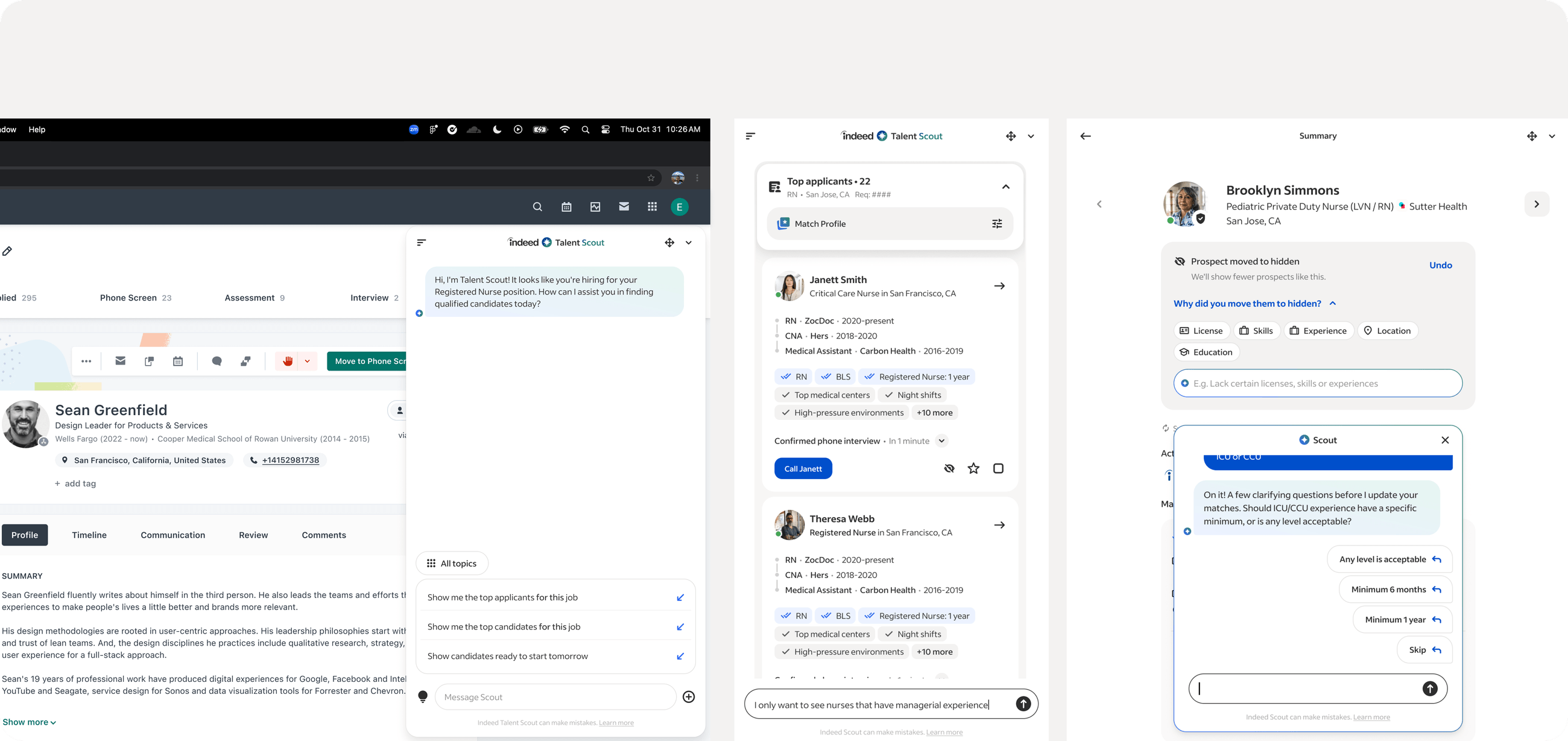
Introducing deep sourcing
Deep Sourcing started with one practical goal: give recruiters a ranked shortlist they can trust without adding extra workflow steps.
Run parallel search strategies across the full talent pool instead of one narrow query path.
Return one ranked list with transparent fit explanations for each candidate.
Reduce manual filtering and bring confidence to early decision-making.
This project focused on quality, trust, and actionability in one sourcing flow.
From concept to system
Design and engineering worked in short loops to move from concept to a testable system with less setup friction.
Cross-functional workshops mapped technical constraints and identified viable matching concepts.
Concepts were translated into testable workflow models to validate feasibility and value early.
Users repeatedly asked for fewer steps, not more options.
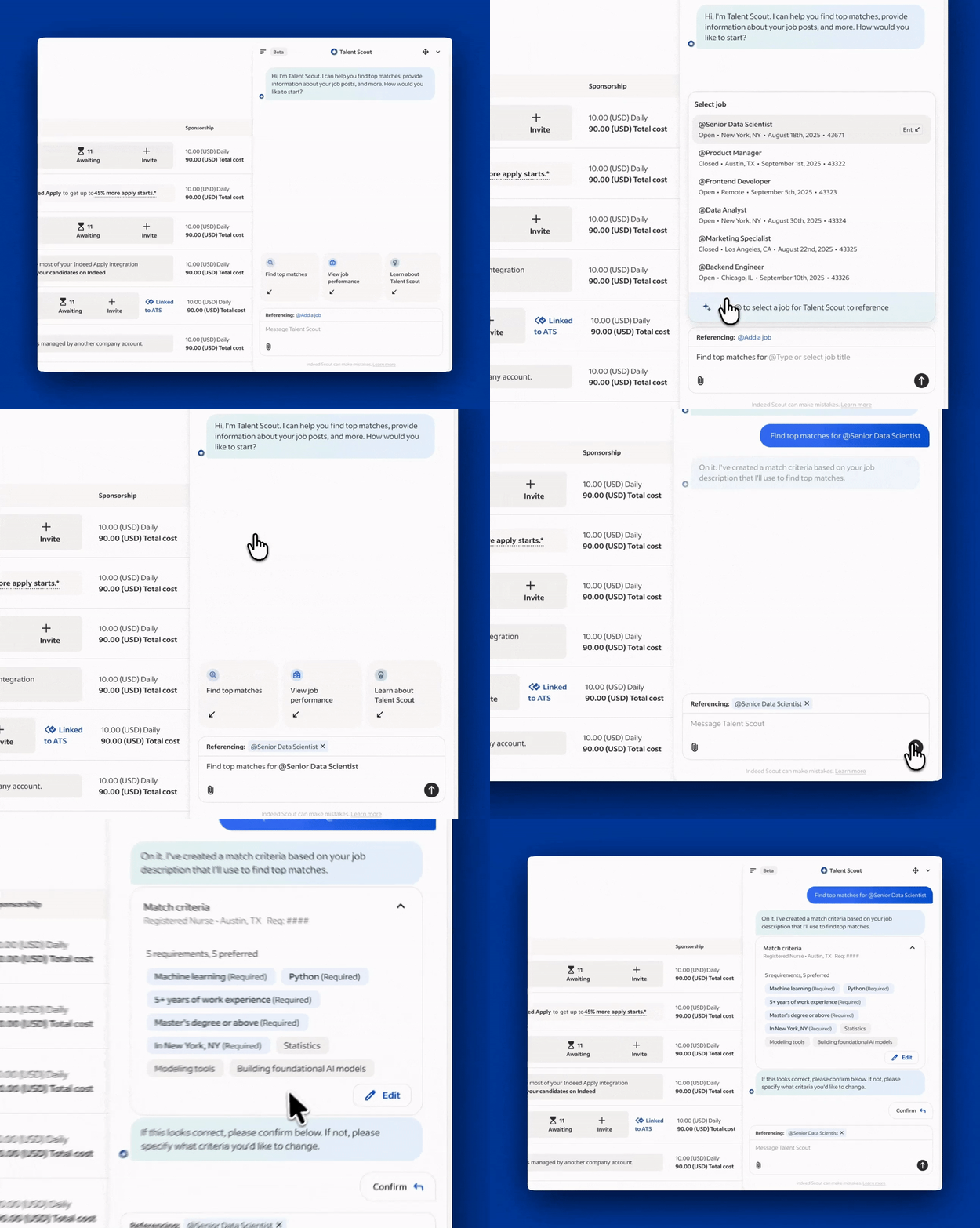
Match criteria auto-populated from job posts and setup collapsed into one clear review step.
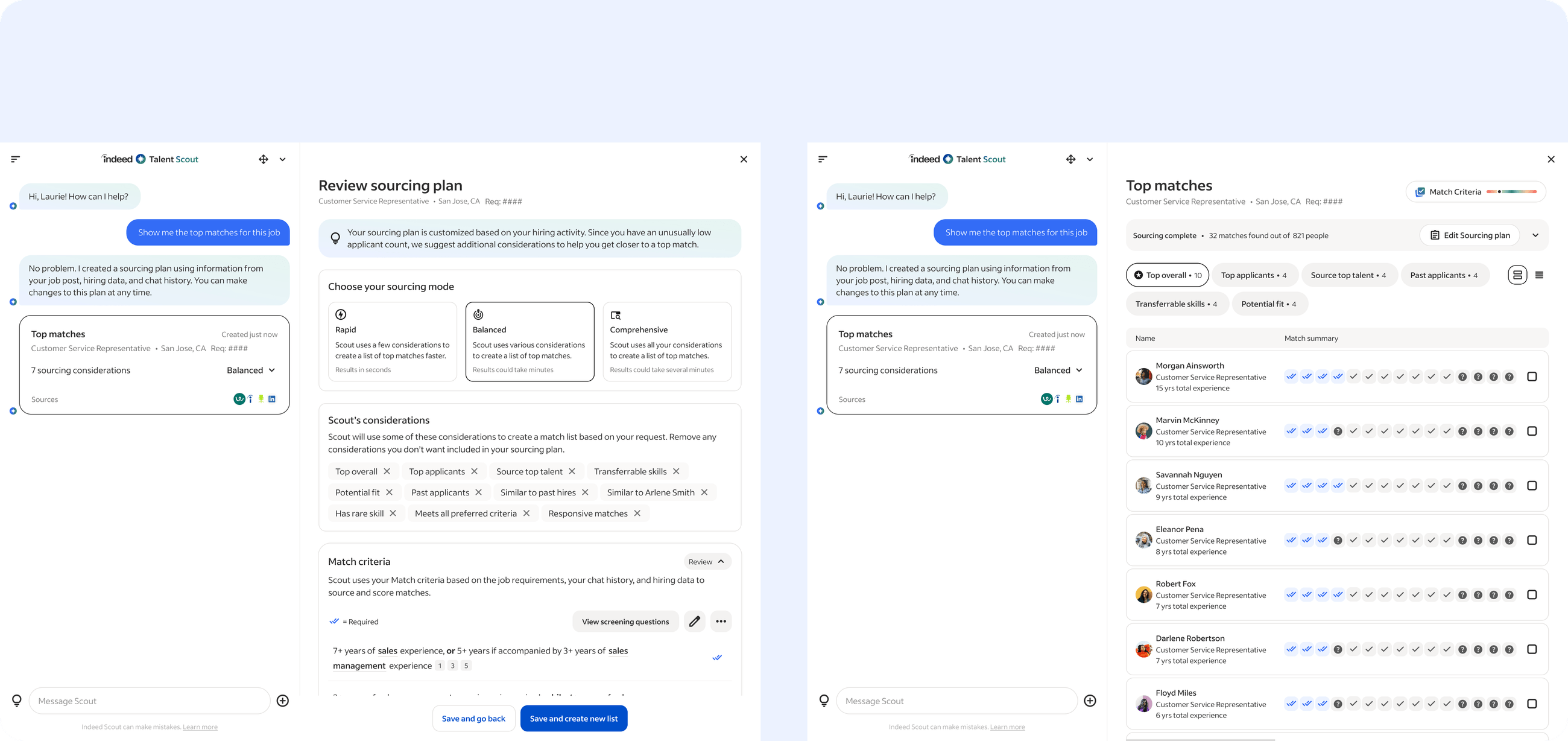
Launching deep sourcing
The launch model prioritized useful results early, then layered in depth only when needed.
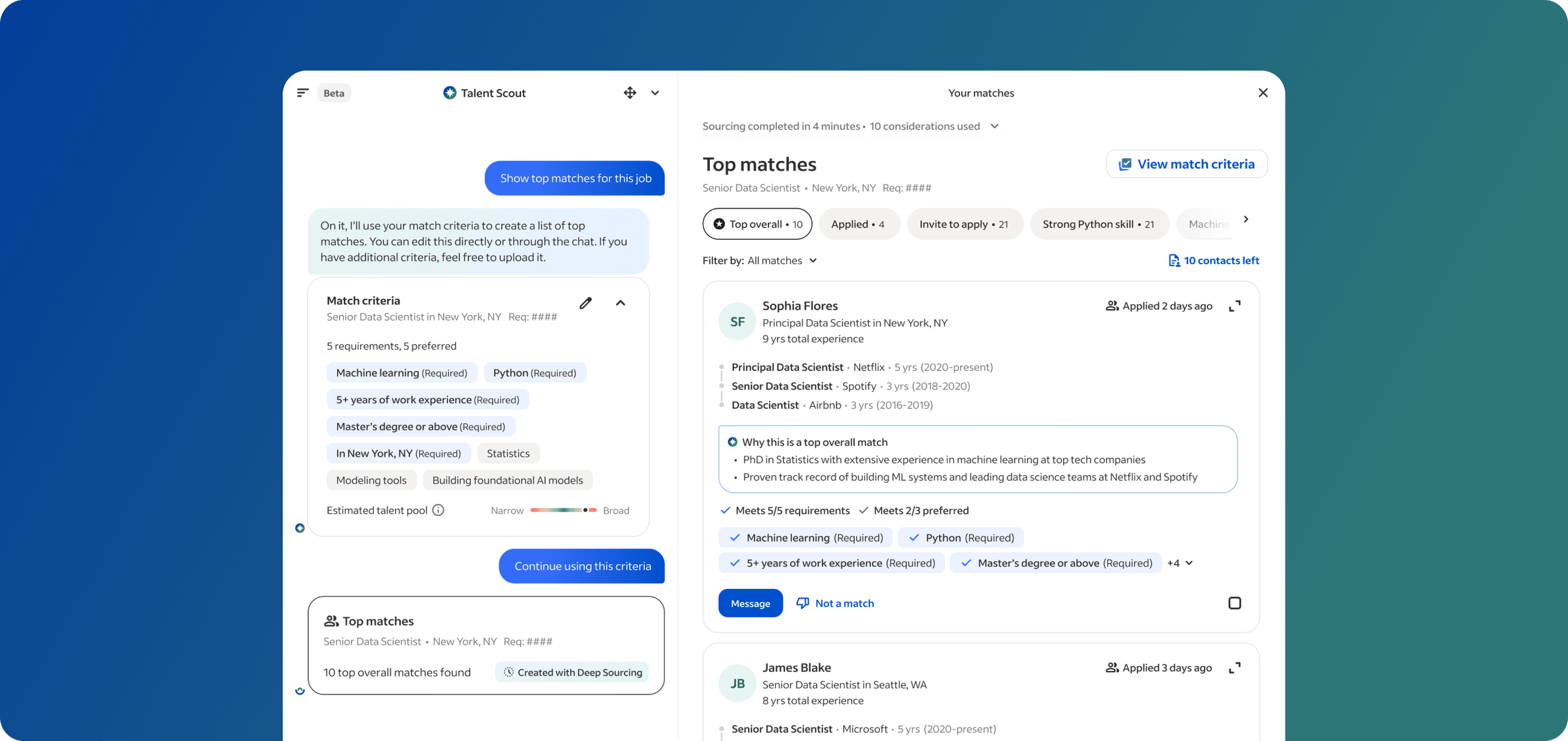
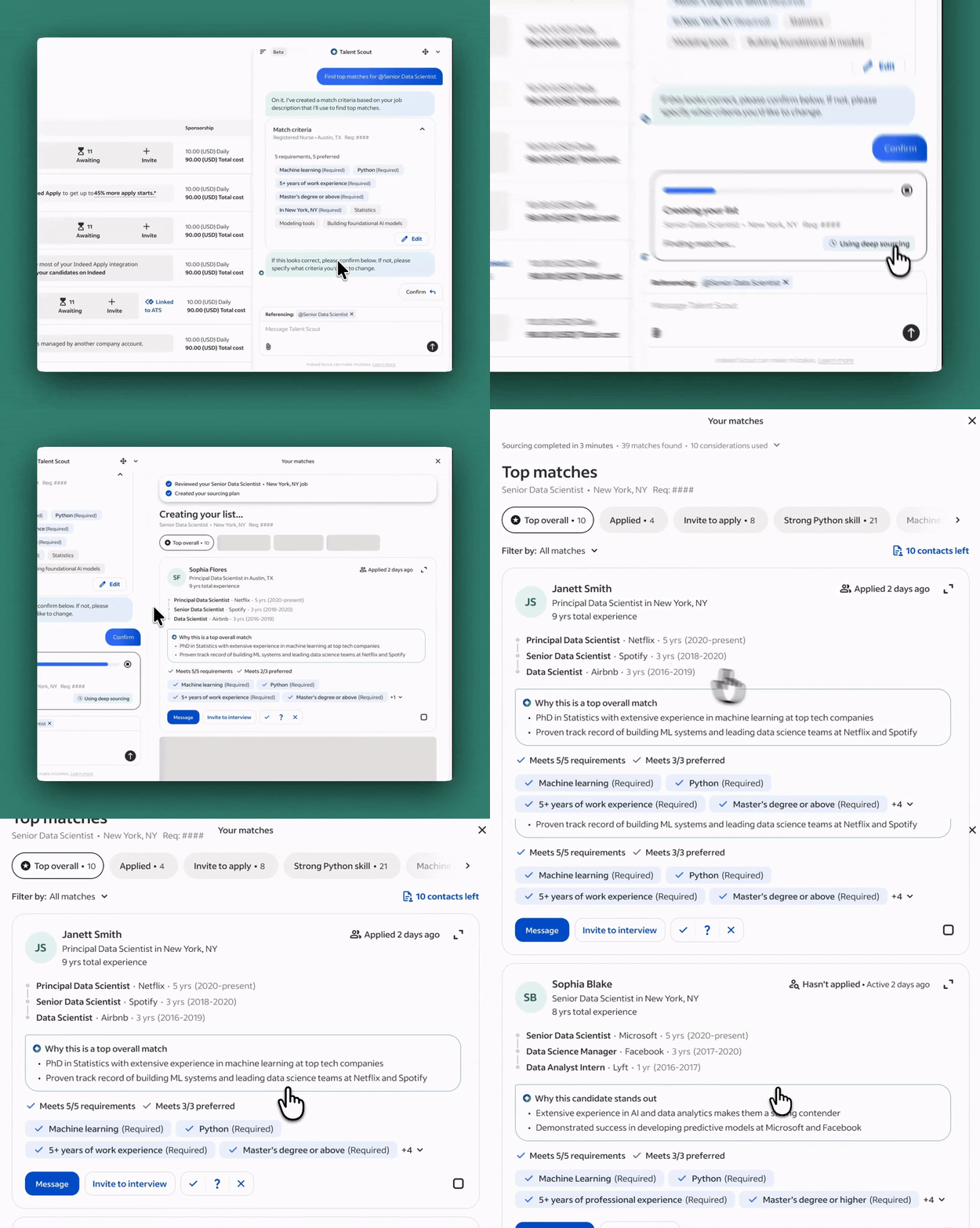
Parallel pool search ranked candidates and attached fit reasoning to each recommendation.
Auto-populated criteria reduced setup effort and shortened time to first meaningful output.
A results-first flow lowered the barrier to trial and improved confidence in early interactions.
Recruiters expected high performance with low overhead, and the experience was shaped to that bar.
Trust and actionability
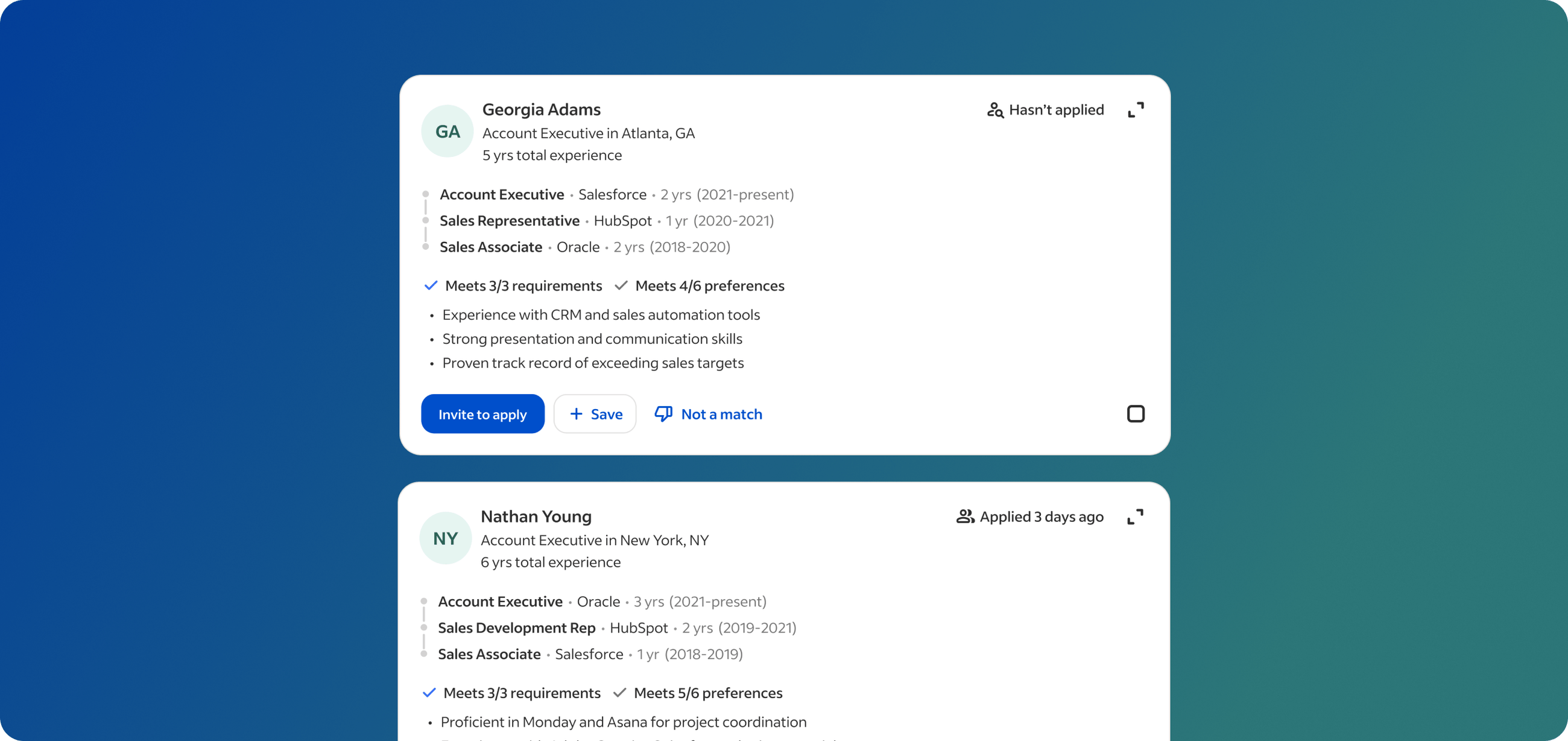
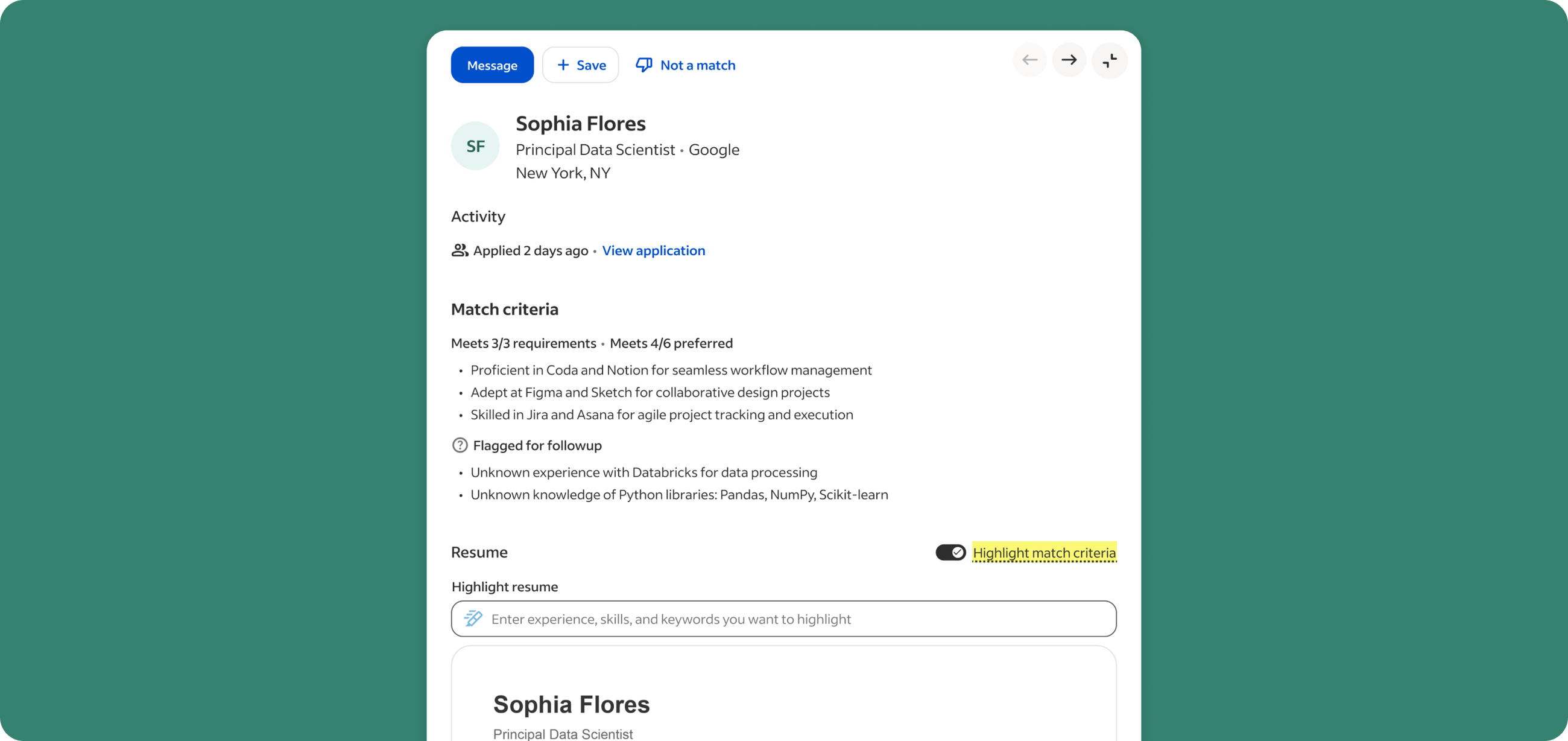
Explainability was essential. Recruiters needed to understand why a candidate matched, not just see a score. Comparative reasoning blocks translated resumes and job criteria into fast, scannable explanations.
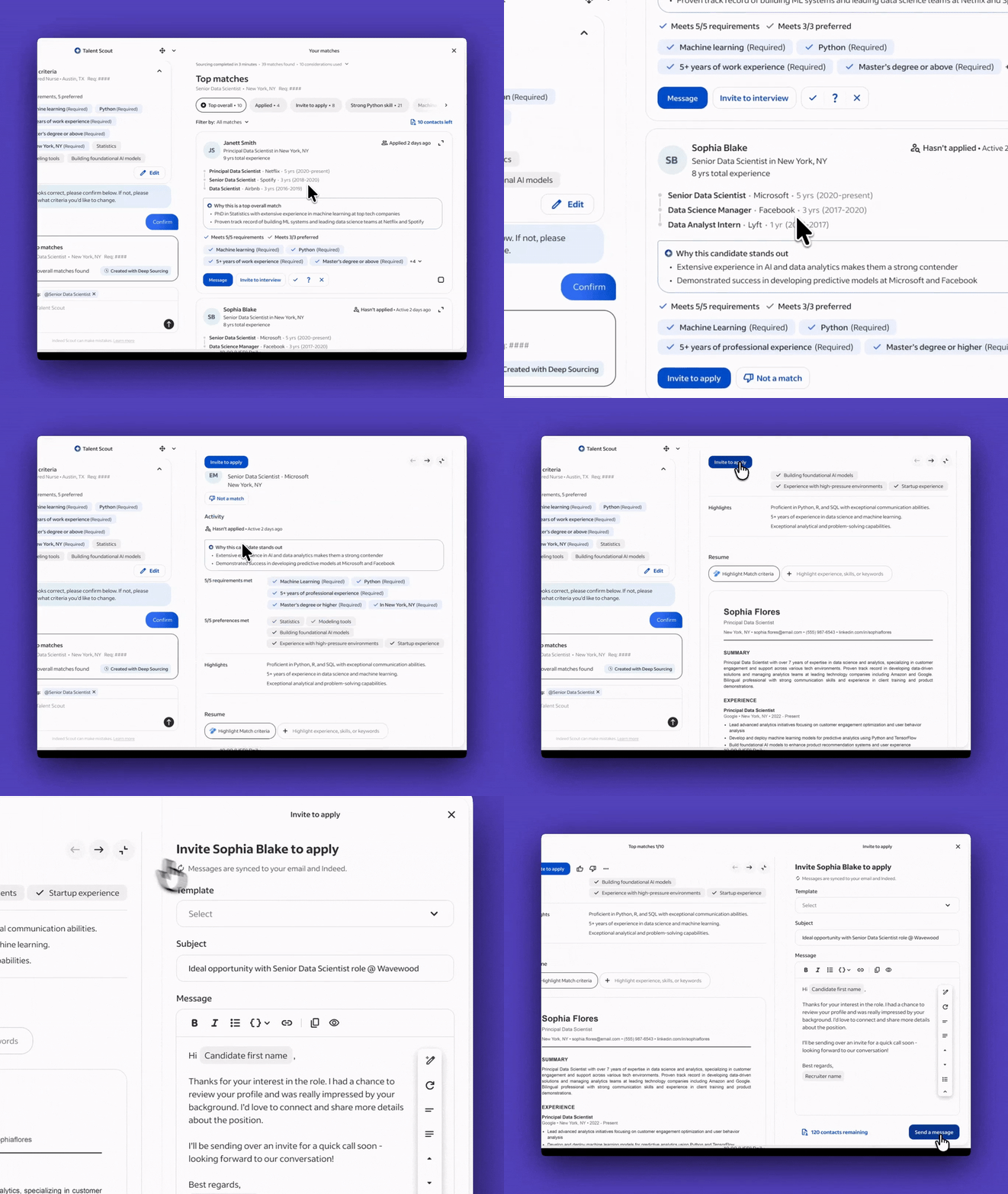
Actionability was equally important. Matches lose value when outreach requires switching tools. The outreach flow kept recruiters in one place, supported AI-assisted personalization, and synced activity back to ATS automatically.
Measuring success
The strongest signal was quality. Deep Sourcing delivered a 300 percent increase in high-quality matches and materially improved candidate response outcomes compared with the previous model.
Confidence improved alongside quality. Match satisfaction rose from 42 to 68 percent, showing that explainability and in-flow actions made results easier to trust and use.
Motion
Other projects
Indeed
An embedded AI recruiting assistant designed for real employer workflows.
Read case studyIndeed
Design systems adoption, governance, and large-scale refresh coordination across employer product.
Read case studyIndeed
Evolving the design system for conversational and generative AI: interaction primitives and workflow architecture so hiring products iterate without fragmenting the platform.
Read case study