Fragmented workflow
Sourcing, screening, and outreach lived in separate systems, forcing constant context switching.
Case Study
Designing and validating an embedded AI hiring system that works directly inside employer workflows across ATS tools and Indeed surfaces.
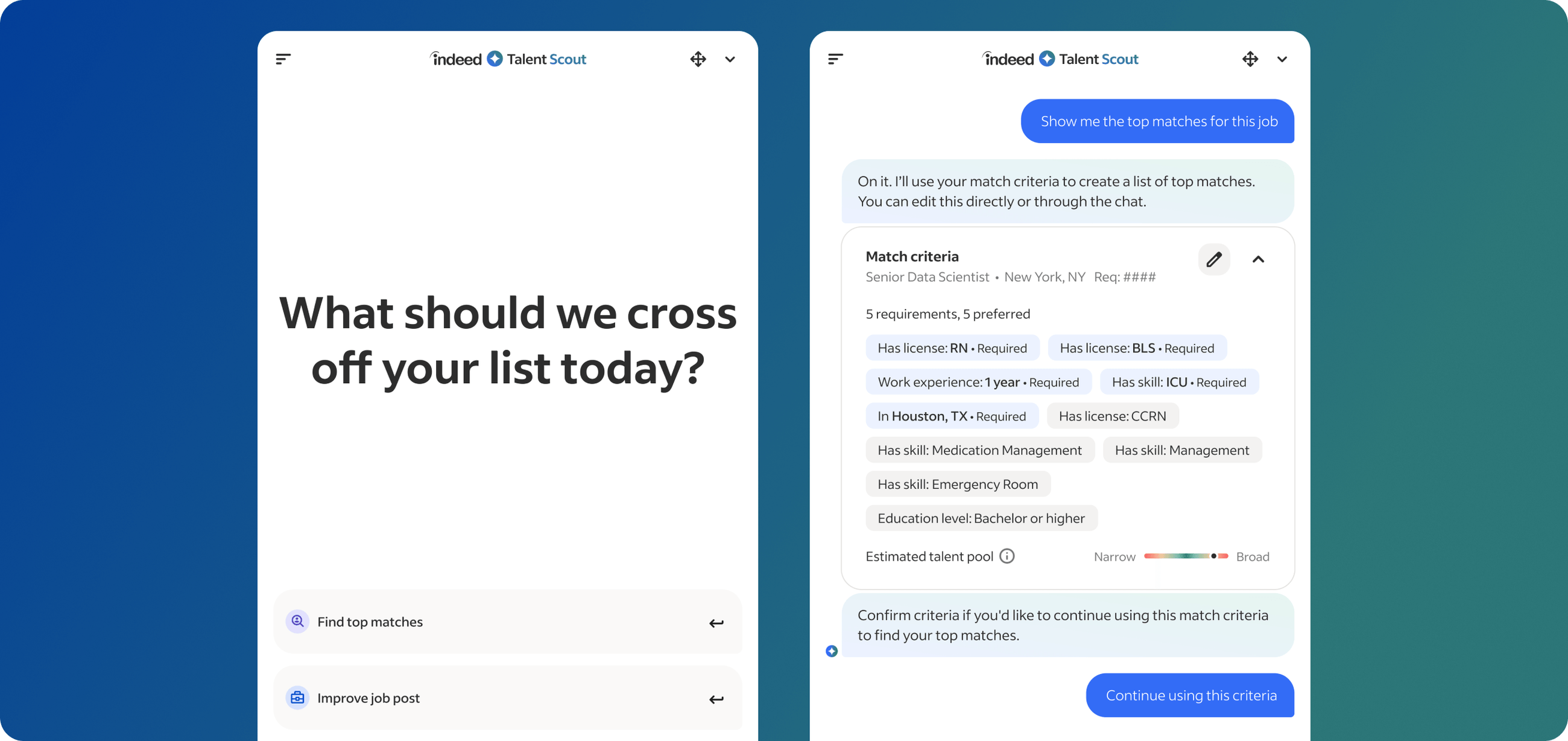
The problem
Recruiting teams were spending too much time navigating tools and not enough time making confident hiring decisions.
Sourcing, screening, and outreach lived in separate systems, forcing constant context switching.
Ambiguous match signals slowed down review and made strong candidates easier to miss.
The goal was not another tool. It was a better workflow inside the tools teams already used.
This project focused on reducing recruiting effort while increasing confidence in candidate fit.
Opportunity
The hypothesis was direct: if AI could remove manual work and explain fit clearly, recruiters could move faster and trust the output.
Automate repetitive sourcing and setup steps that were consuming recruiter time.
Surface candidates traditional search patterns often overlooked.
Make fit reasoning scannable so teams could make faster, better decisions.
This became a strategic initiative because it improved a core employer workflow.
Key focus areas
Early design days
Early design work focused on one question. How do we create a unified interaction model that works across Talent Scout and partner ATS products without losing speed or depth?
The answer was a system that could stay lightweight for quick actions, then expand when recruiters needed deeper context or control.
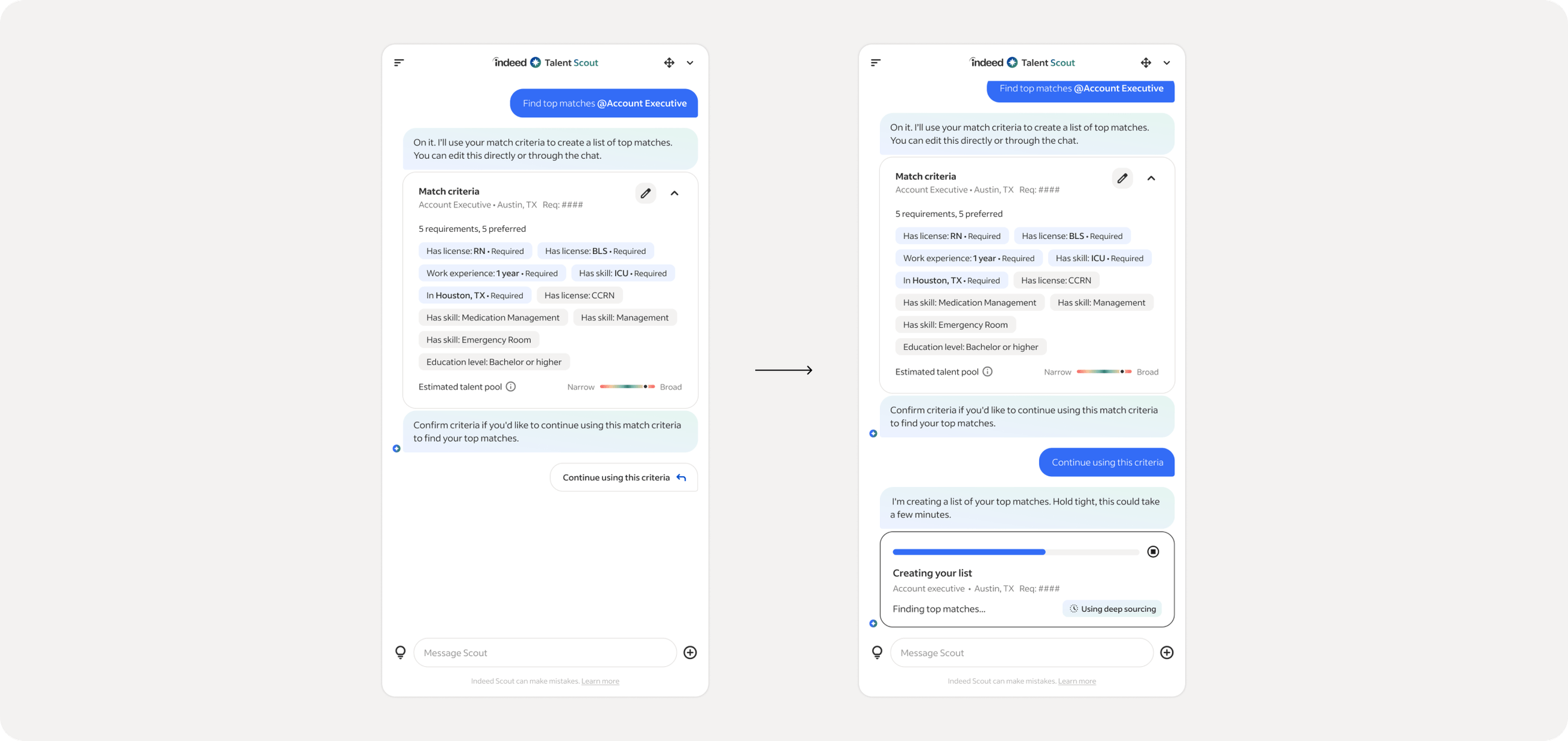
Workflow panels
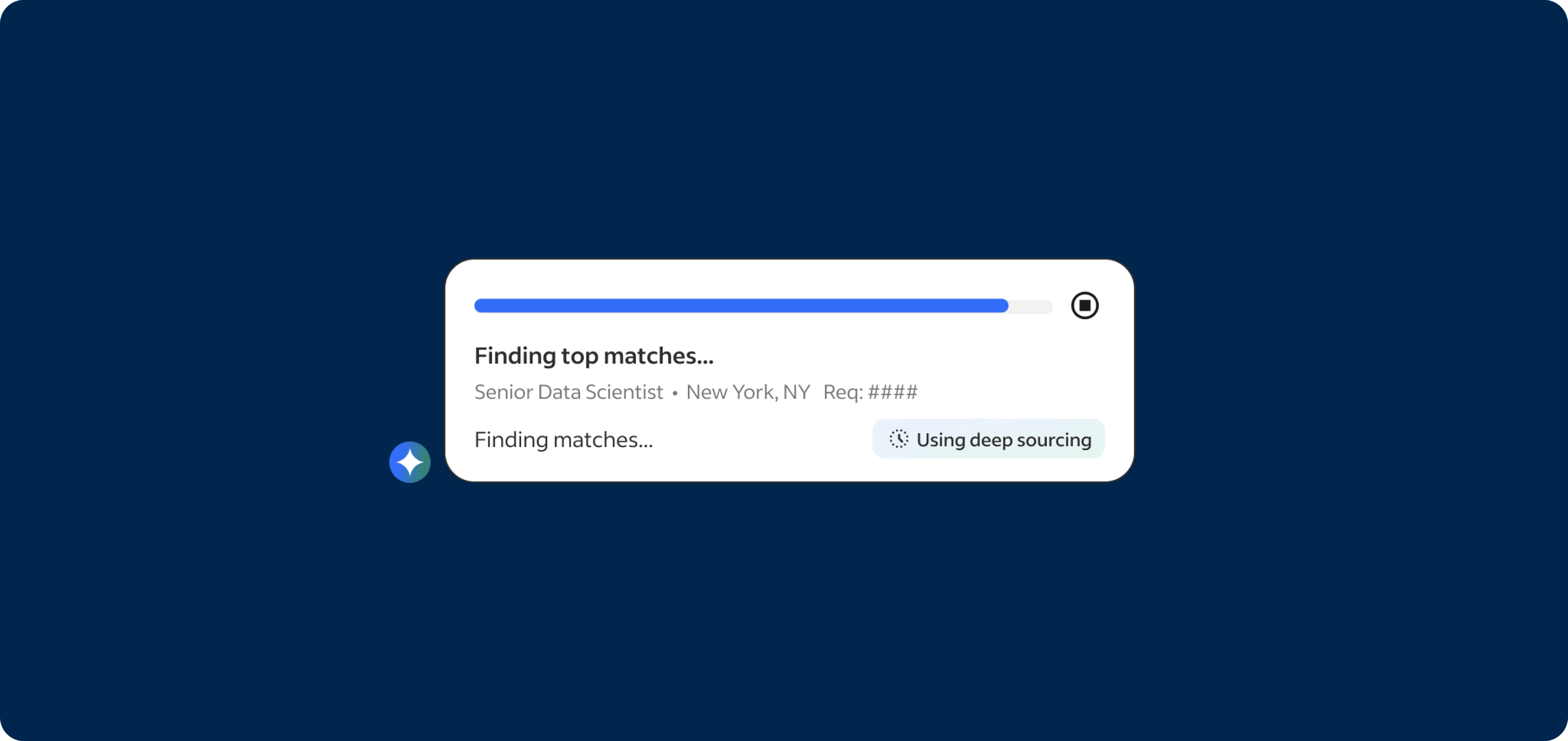
Chat cards became the entry point. They keep the experience fast at first glance, then open into richer workflows only when needed. That gave recruiters speed without forcing them to sacrifice detail.
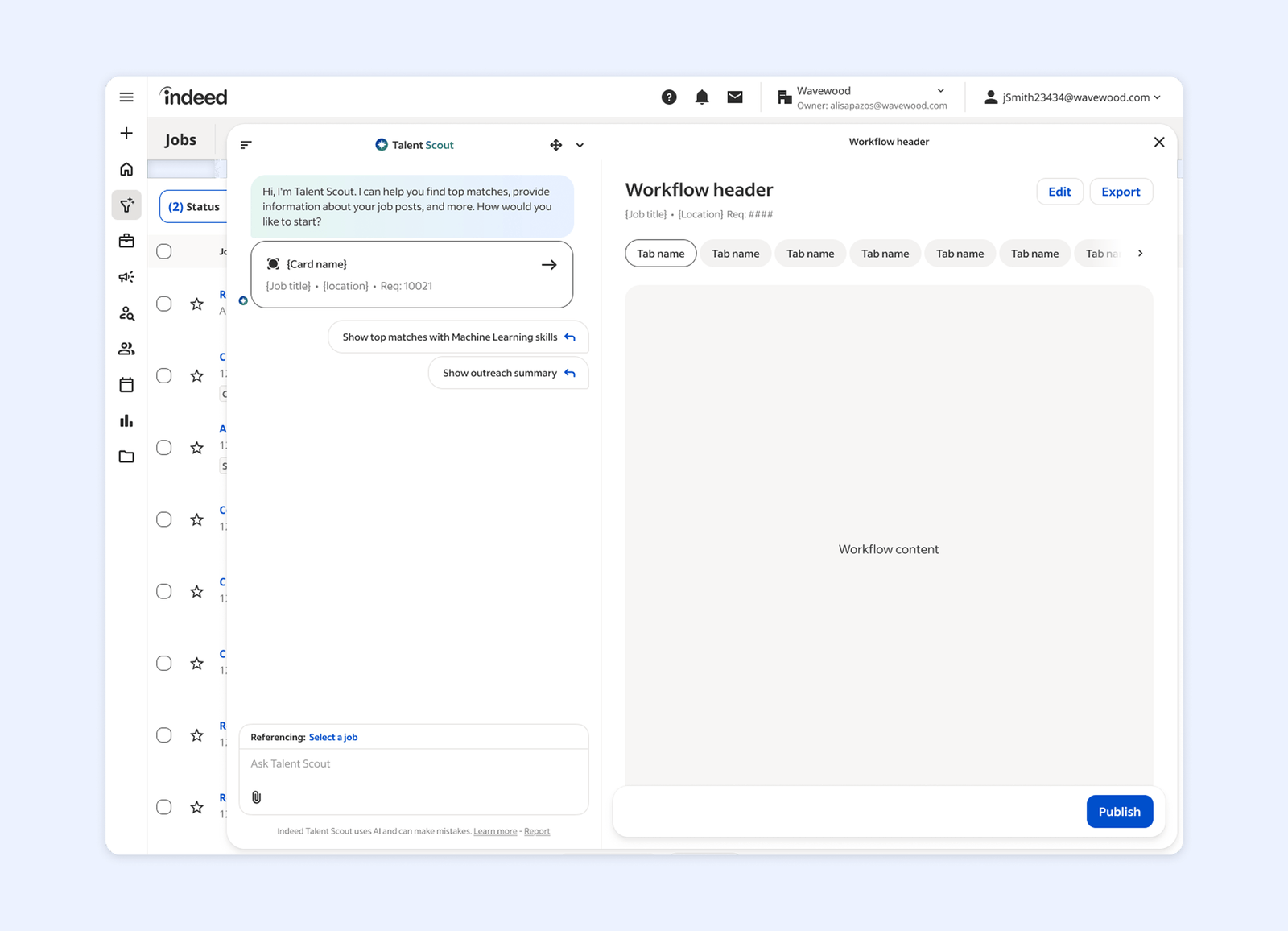
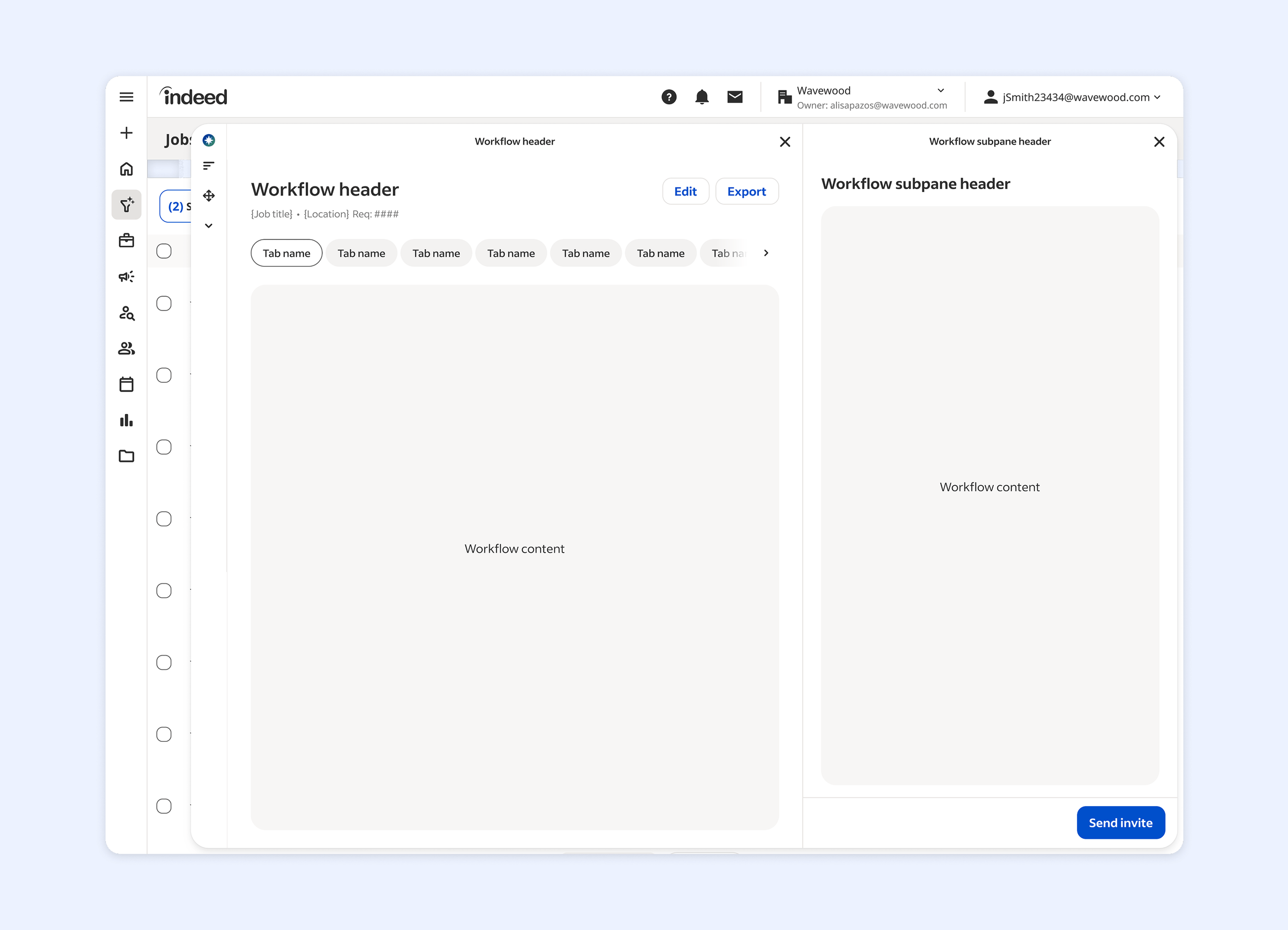
Subpanels
Subpanels handled focused tasks that benefit from side-by-side context. This pattern became the backbone for candidate lists, detail views, and messaging workflows.
Candidate cards
The candidate card system was grounded in recruiter behavior. It prioritized location, experience, and match fit first, because those are the signals people check before they invest more time.
Progressive disclosure
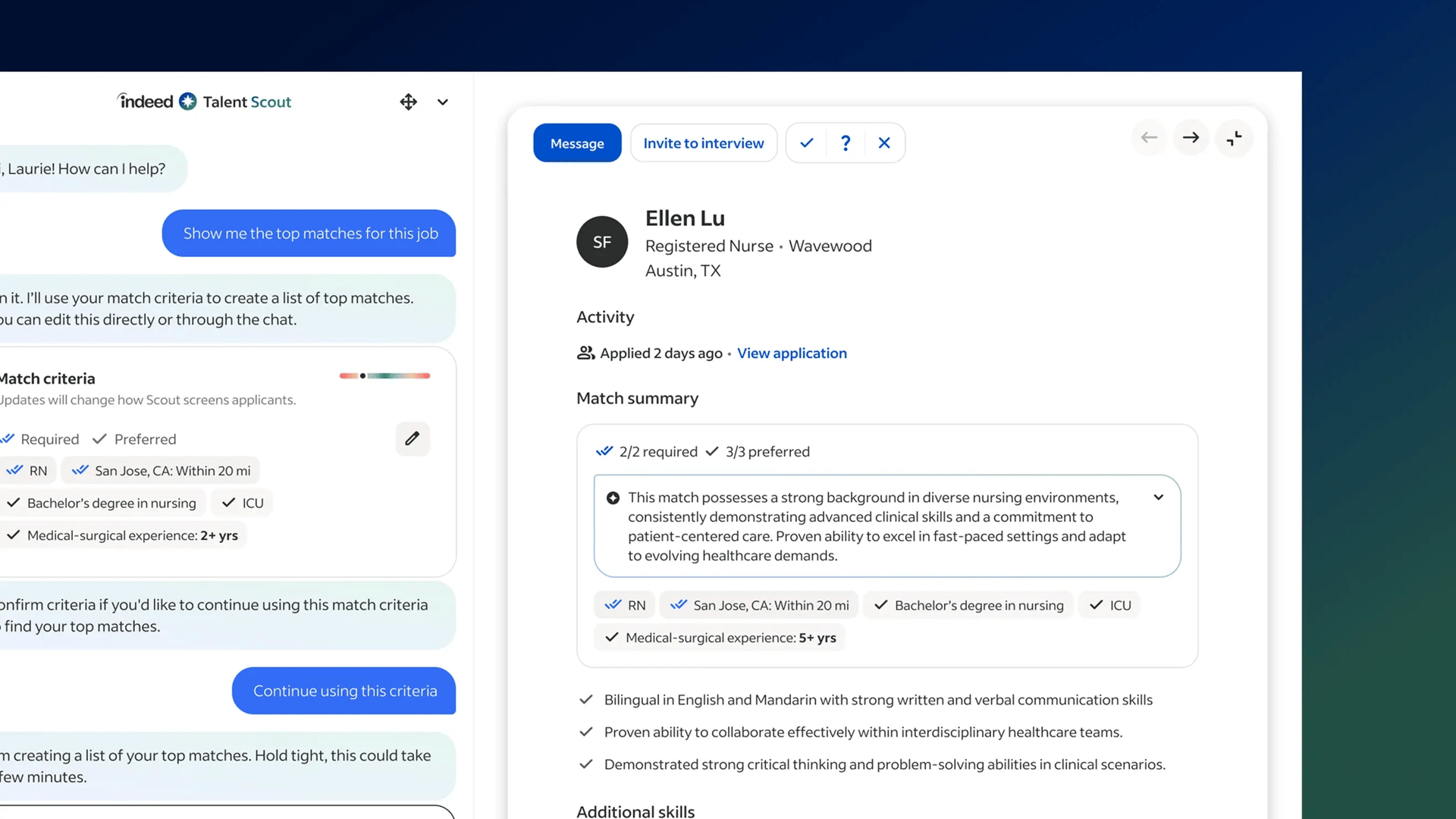
Progressive disclosure kept scanning fast while preserving depth. Cards expanded inline to reveal activity, fit reasoning, and AI context so recruiters could move quickly without losing trust in the recommendation.
Component library
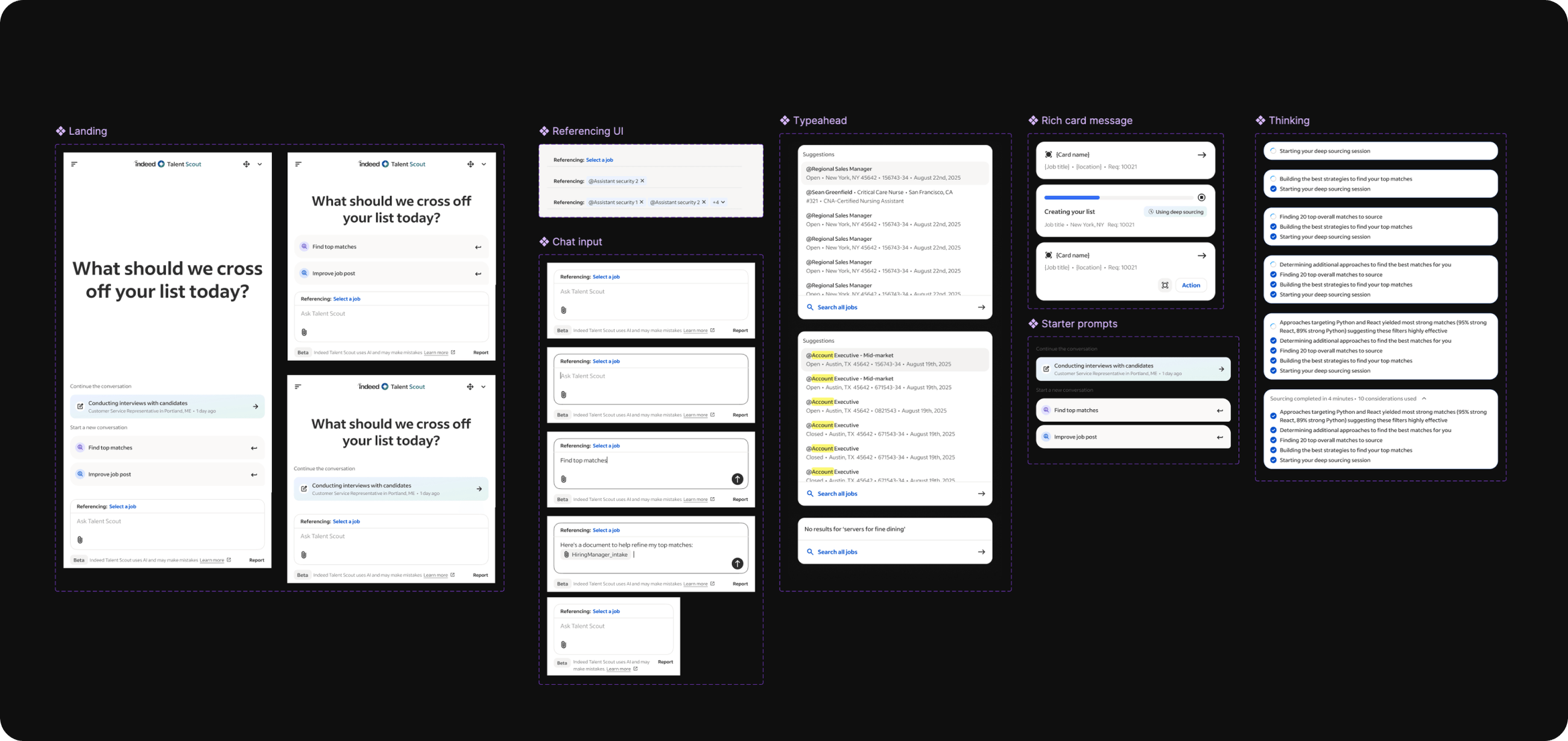
As the product matured, a shared component library made quality repeatable. It helped teams ship faster while preserving consistency across surfaces, states, and integrations.
Validation in real conditions
The team tested inside real employer workflows across Indeed and partner ATS environments, then iterated from observed behavior.
Live environments with real constraints, handoffs, and workflow interruptions.
Setup effort, trust in match reasoning, and speed from recommendation to action.
Design patterns were revised quickly when usage data contradicted design review assumptions.
The build-observe-adjust loop kept the product grounded in day-to-day recruiter behavior.
What this unlocked
Talent Scout proved that conversational AI can operate as an embedded recruiting layer across systems. It connected matching, review, and outreach in one coherent flow.
That shift created a durable foundation for future AI hiring products across teams.
The practical result was clear. Less context switching, faster decisions, and stronger confidence in candidate recommendations through transparent reasoning and in-flow actions.
The project moved from concept to validated product direction with clear room to scale.
Other projects
Indeed
Employer-wide adoption, semantic tokens, governance across 1,200+ repositories, and coordinated refresh across 2,000+ surfaces.
Read case studyIndeed
An AI-powered candidate sourcing system built to move beyond traditional search.
Read case studyIndeed
Centralized platform foundations: components, tokens, and production validation at Indeed scale.
Read case study